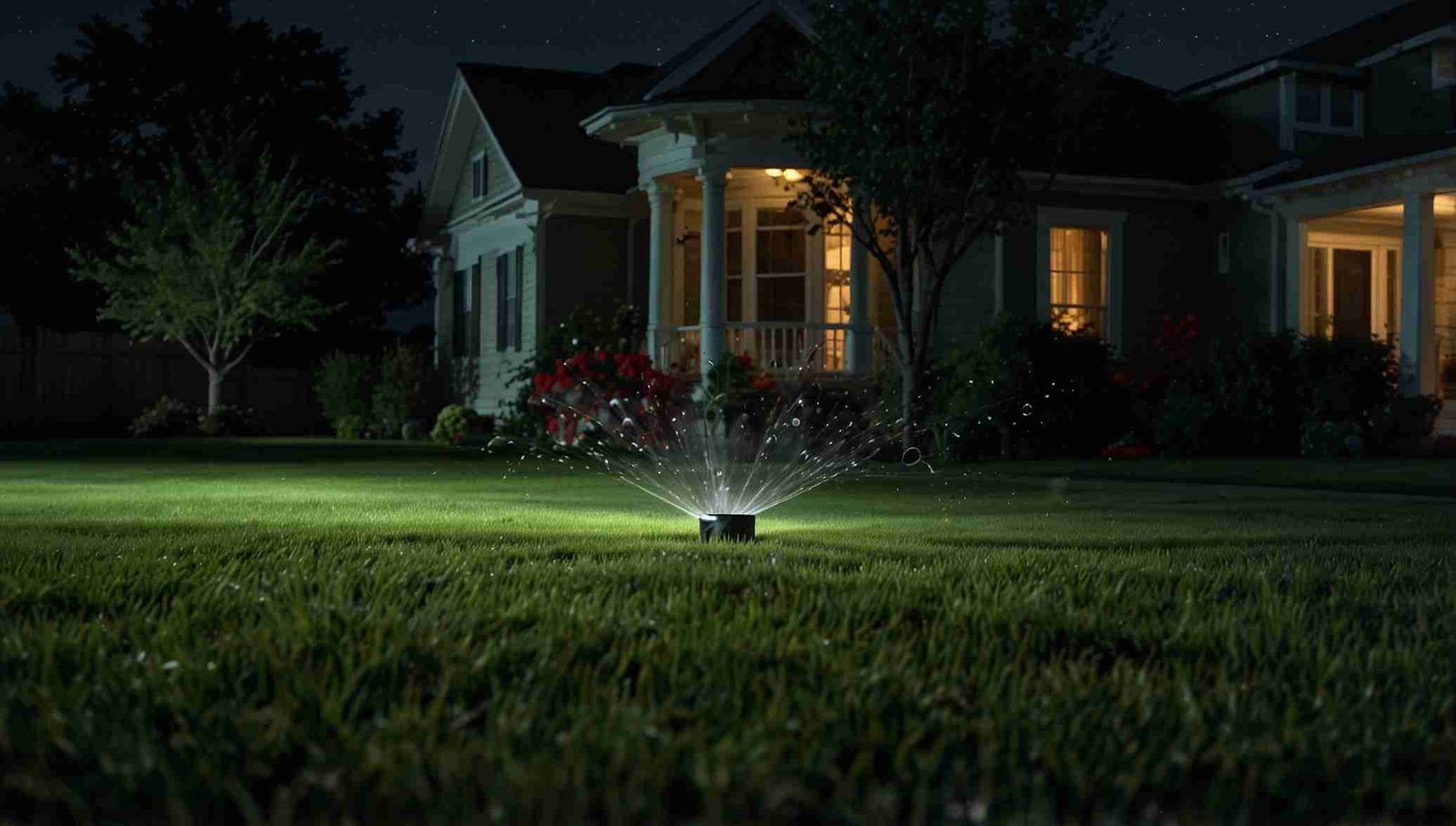
Here in Corpus Christi, we’re no strangers to heat. When the sun beats down relentlessly all day, the idea of giving your lawn a cool drink of water in the evening seems like a kind, refreshing thing to do, right? It feels intuitive – the sun’s gone down, so the water won’t evaporate, and the grass can just soak it all up overnight. It’s a common practice, a “lawn myth” passed down through generations.
But here’s the truth: watering your lawn at night might actually be doing more harm than good, especially in our humid South Texas climate. Instead of a refreshing sip, you could be setting the stage for a host of problems that can severely damage your lawn. Let’s dig into why the “myth of night watering” needs to be busted and what the best watering practices are for a thriving Corpus Christi lawn.
Why Night Watering Seems Like a Good Idea (But Isn’t)
The logic behind night watering is simple:
- Less Evaporation: With no sun, less water is lost to the air, so more gets to the roots.
- Longer Soaking Time: The water has all night to penetrate the soil.
On the surface, this sounds efficient. However, it overlooks a critical factor: the extended presence of moisture on grass blades and in the soil.
The Dark Side of Night Watering: What Really Happens
When you water in the evening, especially after sunset, the grass blades and the soil stay wet for a prolonged period, sometimes for 8-10 hours or more until the morning sun and warmth can dry them out. This creates a perfect storm for several serious issues:
1. Fungal Diseases: The Silent Killers
This is the biggest and most common problem associated with night watering, especially in a humid climate like Corpus Christi. Many common lawn diseases are caused by fungi that thrive in cool, moist conditions.
- Ideal Breeding Ground: When grass blades remain wet for extended periods (typically 6-8 hours or more), it provides the ideal environment for fungal spores to germinate, grow, and infect the grass.
- Common Culprits: You might start to see issues like:
- Brown Patch: Large, circular patches of thinning, brown, or yellowing grass, often with a darker, smoky ring at the edge. Common in St. Augustine grass.
- Gray Leaf Spot: Small, oval spots with a dark border and a tan or gray center, often appearing on St. Augustine grass during hot, humid weather.
- Dollar Spot: Small, circular, sunken patches of straw-colored grass, about the size of a silver dollar.
- Spread and Damage: Once these fungi take hold, they can spread rapidly, causing widespread damage that can be difficult and costly to treat.
2. Increased Pest Activity
While some pests prefer dry conditions, others thrive in damp environments. Slugs, snails, and certain insect larvae can be more active and problematic in consistently moist grass. Furthermore, a lawn weakened by fungal disease is more susceptible to insect infestations as its natural defenses are compromised.
3. Reduced Oxygen to Roots
While water is essential, roots also need oxygen. When soil remains saturated for long periods, particularly in heavy clay soils common in some parts of South Texas, the air pockets in the soil fill with water, depriving the roots of vital oxygen. This can lead to root rot and overall plant stress.
4. Inefficient Use of Water (Surprisingly!)
You might think night watering is efficient because of less evaporation. However, if water sits on the surface for too long or if the soil is already saturated, it can lead to:
- Runoff: If your soil can’t absorb the water quickly enough, it will simply run off into sidewalks, driveways, or storm drains, wasting water and carrying away valuable topsoil.
- Deep Percolation Beyond Root Zone: Water that sits on saturated soil may eventually percolate deeper than your grass roots can reach, essentially “wasting” it by sending it past where the plant can access it.
5. Mold and Mildew on Hard Surfaces
Beyond the lawn itself, continuous moisture on patios, decks, and walkways from overnight watering can encourage the growth of slippery mold and mildew, making surfaces unsightly and potentially hazardous.
So, When Is the Best Time to Water Your Lawn?
The consensus among turfgrass experts is clear: early morning is the optimal time to water your lawn.
- The “Sweet Spot” (Typically 4 AM to 8 AM):
- Low Evaporation: Temperatures are cooler, and winds are generally calmer, so less water is lost to evaporation compared to midday.
- Optimal Absorption: The soil has had all night to cool down, making it more receptive to absorbing water efficiently.
- Drying Time: This is the most crucial benefit. Watering early allows the grass blades to dry completely as the sun rises and temperatures begin to warm up. This minimizes the period of leaf wetness, drastically reducing the risk of fungal diseases.
- Replenishment Before Stress: It gives your lawn a chance to “drink up” and be fully hydrated before the heat of the day kicks in, helping it withstand the afternoon stress.
- Midday Watering (Generally a Bad Idea): Avoid watering in the middle of the day (10 AM to 4 PM). High temperatures and strong winds lead to significant water loss through evaporation. Much of the water won’t even reach the roots.
- Late Afternoon/Early Evening (Still Risky): While better than late night, watering in the late afternoon still doesn’t allow enough time for the grass blades to dry before sunset, putting you back in the danger zone for fungal issues. If you absolutely cannot water in the morning, this is a distant second best, but aim to finish at least 2-3 hours before sunset.
How to Water Properly for a Healthy Lawn
Beyond timing, the method of watering is also key:
- Water Deeply and Infrequently: This is the golden rule for established lawns. Instead of light, daily sprinkles, water for longer durations (e.g., 20-30 minutes per zone for sprinklers, or enough to deliver 1 inch of water per week) but less often. This encourages grass roots to grow deeper, making the lawn more drought-tolerant and resilient.
- Monitor Your Lawn: Don’t just set a timer and forget it. Pay attention to your grass. If it starts to look dull, takes on a blue-green hue, or shows footprints that linger, it’s telling you it needs water.
- Check Soil Moisture: Use a screwdriver or soil probe to check how deep the water is penetrating. It should be 6-8 inches deep. If not, increase your watering duration.
- Address Drainage Issues: If you have areas that consistently pool water, even with proper watering, you might have underlying drainage problems that need to be addressed to ensure water can effectively reach the root zone without suffocating them.
By understanding the “myth of night watering” and adopting smart, early morning watering habits, you can significantly reduce the risk of common lawn diseases and ensure your Corpus Christi lawn stays vibrant, healthy, and a true source of pride, even when the South Texas sun is shining its brightest. Your lawn will thank you!